
Let me guess. Your closet is full, but every morning feels like a small crisis. You pull out three outfits, reject all of them, and end up in the same jeans-and-top combo you’ve worn a hundred times. Sound familiar?
Here’s the thing — that’s not a fashion problem. That’s a clarity problem. You don’t need more clothes. You need to figure out how to find your personal style, the kind of style that makes getting dressed feel easy instead of exhausting.
Personal style has nothing to do with chasing every new trend or spending a fortune. It’s about knowing what works for you — your body, your life, your personality — and building a wardrobe around that. And honestly? Once it clicks, everything gets simpler. Shopping gets faster. Mornings get calmer. And you start feeling like yourself in your clothes, instead of a stranger wearing them.
What Is Personal Style, Really?
Forget the glossy definition for a second. Personal style is simply this: the way you dress when nobody’s telling you what to wear. It’s the colors you reach for without thinking. The silhouettes that make you stand a little taller. The accessories that feel like you — whether that’s a delicate gold necklace or big, bold hoops.
Some women live in clean neutrals and sharp lines. Others light up in prints, color, and statement pieces. Some mix vintage finds with modern basics and somehow make it all look intentional. None of them are wrong. There’s no single “correct” way to dress — there’s only what feels true to you. And here’s something worth remembering: your personal style isn’t set in stone. The woman you are at 25, 35, or 50 will dress differently, and that’s not inconsistency — that’s growth. Your wardrobe is allowed to evolve as your life does.
1. Explore Your Fashion Preferences
Before you buy a single new thing, play detective with the wardrobe you already have. This is my favorite part, because the answers are usually hiding in plain sight.
Open your closet and notice: which outfits do you grab on repeat? Which pieces make you feel genuinely good — not “this will do” good, but actually good? Now look closer. What colors keep showing up? What fabrics? Relaxed fits or tailored ones? Simple or detailed?
Ask yourself a few honest questions:
- Do I feel more like myself in casual, classic, elegant, or sporty outfits?
- Am I a neutrals person, or do bright colors make me happy?
- Do I love simple, clean clothing — or do I light up with eye-catching details?
- What did I wear on the last day I felt really confident?
You can also start a little inspiration folder on your phone. Screenshot outfits you love from Instagram, Pinterest, or even people you pass on the street. After a couple of weeks, scroll through it. You’ll start seeing patterns — maybe it’s oversized shirts, maybe it’s tailored trousers, maybe it’s a certain color palette that keeps appearing. Those patterns? That’s your taste talking. Listen to it.

2. Choose a Style That Fits Your Actual Life
This is where a lot of style advice falls apart — it shows you a dream wardrobe for a life you don’t live. Beautiful, but useless. Your personal style has to survive your real days. If you spend ten hours at a desk, you need polished pieces that don’t wrinkle into sadness by noon. If your calendar is full of dinners and events, a few dressier pieces you can restyle different ways will serve you better than twenty casual tops.
Think about your daily routine, your climate, and the occasions you dress for most. Then build around that.
And don’t feel pressured to pick one label. Style isn’t a multiple-choice test. A classic blazer over jeans looks effortlessly polished. Sneakers can take a dressy outfit down to earth. Mixing influences is how personal style is born — the blend is what makes it yours.
3. Find Colors That Actually Work for You
Color is one of the fastest ways to make your wardrobe feel pulled together. And you don’t need a color-theory degree — just start with what you already love.
Most women do well starting with dependable neutrals: black, white, navy, beige, gray, brown. They’re the quiet heroes of a wardrobe because they go with almost everything.
Here’s a practical trick: hold a piece of clothing up near your face in natural light. Does your skin look brighter? Do your eyes pop? Then it’s your color. If you look a little washed out, it’s not — no matter how pretty it looked on the hanger.
Pick a small family of colors that play well together, and suddenly mixing and matching becomes almost automatic. Fewer “does this go with that?” moments. More outfits from fewer pieces.
4. Build Around Versatile Essentials (Not a Huge Wardrobe)
A great wardrobe isn’t a big wardrobe. It’s a smart one — pieces that work hard, mix easily, and suit your life.
Here’s a solid starting lineup. Treat it as inspiration, not law — swap in whatever fits your climate, culture, and daily routine:
- Jeans that fit you beautifully (worth the search, trust me)
- Simple T-shirts and easy tops in your colors
- A classic button-down shirt
- Comfortable trousers that aren’t jeans
- A blazer or lightweight jacket that pulls outfits together
- One versatile dress or outfit for occasions
- Everyday shoes you can actually walk in
- A practical bag and a few go-to accessories
When choosing each piece, think about three things: fit, fabric, and flexibility. Does it fit well right now? Is the fabric decent enough to last? And can you wear it at least three different ways? If yes, yes, and yes — it’s a keeper.
For more ideas on building from here, take a look at our guide to creating a timeless wardrobe with essential pieces that never go out of style.

5. Experiment — That’s Literally How Style Is Found
Nobody wakes up one morning with their personal style fully formed. It’s discovered through trying things, and yes, through a few outfits that make you laugh at yourself in the mirror. That’s normal. That’s the process.
Start playing with what you own. Wear that blazer with the casual dress. Try the scarf you always ignore. Swap your usual shoes for something unexpected and see what happens.
Play with proportions too — a relaxed, flowy top often looks amazing with structured trousers, while a fitted top balances out wide-leg pants beautifully. These little contrasts are what make outfits look styled instead of just worn.
And here’s a habit worth stealing: photograph the outfits you love. Not for Instagram — for yourself. After a month or two, scroll through those photos. You’ll see your style emerging clear as day: the combinations you repeat, the pieces you can’t stay away from, the looks that feel most like you.
6. Let Accessories Do the Talking
If your wardrobe is the sentence, accessories are the personality in it. They’re the easiest, cheapest way to make simple outfits feel like yours.
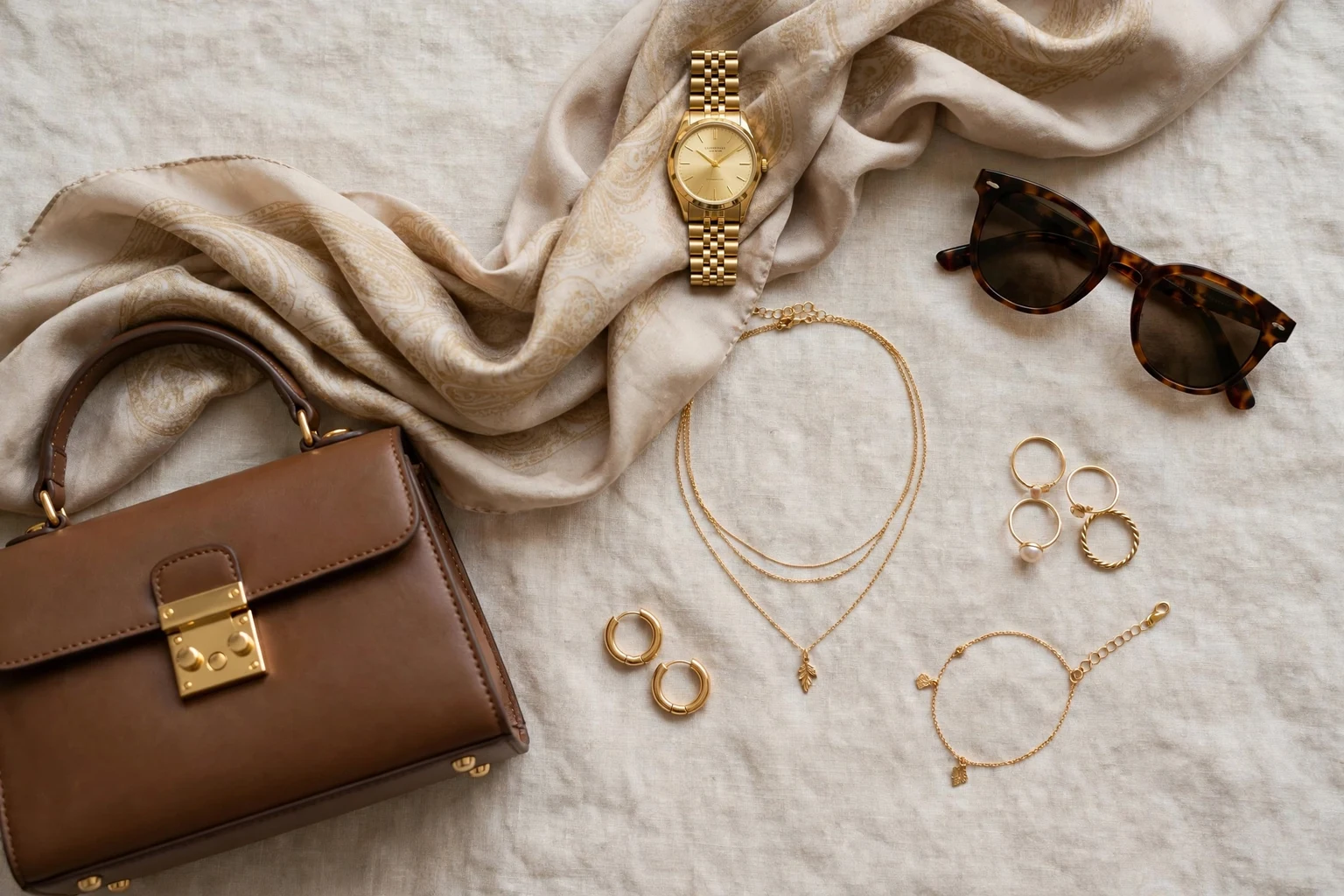
A belt can completely change how a dress sits. A scarf adds color exactly where you want it. The right earrings can take a plain top from “fine” to “finished.” Bags, watches, sunglasses, shoes — they all shape the story your outfit tells.
Start with what feels natural. If you’re a minimalist at heart, a classic watch and simple studs might be your whole jewelry wardrobe, and that’s perfectly chic. If you love expression, go for the layered necklaces, the colorful bag, the shoes people compliment.
Change one or two accessories at a time and notice the difference. The goal is to complement your outfit, not to decorate it just because something’s trending.
7. Shop Like You Mean It
Once you know your style, shopping transforms from overwhelming to almost fun. Almost.
Before anything goes in your bag — physical or virtual — run it through three quick questions:
- Does it fit my life? Where will I actually wear this?
- Does it fit my wardrobe? Can I make at least three outfits with things I already own?
- Does it fit me? Comfortable, flattering, in my colors?
If it fails any of the three, put it back. No matter how cute it is. No matter how good the sale is. Future you — staring at an unworn top with the tags still on — will thank present you.
Keep a short running list on your phone of what your wardrobe genuinely needs. (“Black ankle boots — comfortable, low heel.” “A cream knit for layering.”) Shopping with a list keeps you focused and stops the slow creep of buying your fifth almost-identical top.
And when you do buy, check the things that matter long-term: fabric quality, stitching, care instructions, and whether the price matches how often you’ll wear it. A well-made piece you wear fifty times is cheaper per wear than a bargain you wear twice.

8. Take Care of What You Own
Personal style isn’t just about buying — it’s about keeping. The woman whose clothes always look good usually isn’t buying more than you. She’s just taking better care of what she has.
Read the care labels (yes, really). Store things properly — knits folded, blazers on good hangers. Fix the loose button now instead of retiring the whole shirt. Keep your closet organized enough that you can actually see what you own; half of “nothing to wear” is just “can’t find anything.”
Every few months, do a quick honest review. Pull out the pieces you haven’t touched and ask why. Sometimes the answer is “wrong season” — fine, store it. Sometimes it’s “this was never really me” — and that’s okay too. Letting go isn’t failure. It’s making room for the style you’re actually building.
Common Personal Style Mistakes to Avoid
A few traps almost everyone falls into at some point:
Chasing every trend. Trends are fun to watch, and borrowing one here and there keeps things fresh. But building your whole wardrobe on what’s hot this month is how you end up with a closet full of strangers.
Ignoring fit. A gorgeous design in the wrong size will never become a favorite. Fit is everything — and a good tailor is worth more than three new tops.
Dressing for a fantasy life. If your days are casual, a closet full of cocktail dresses isn’t aspirational — it’s just unworn. Dress for the life you have, elevated.
Shopping on impulse. One unplanned buy is harmless. A wardrobe built on impulse buys is a wardrobe where nothing goes together.
Comparing yourself to everyone else. Inspiration? Wonderful. Measuring your style against someone else’s highlight reel? Exhausting and pointless. Your style only has to please one person.
Conclusion
Learning how to find your personal style isn’t a weekend project — it’s a slow, enjoyable process of paying attention to yourself. What you love. What makes you feel like you on your best days.
Start small: open your closet tonight and notice your favorites. Save a few outfits that catch your eye this week. Pick three words that describe how you want to look. That’s it. That’s the beginning. Your style is already in there somewhere. You just have to uncover it — one honest outfit at a time.
Frequently Asked Questions
How do I find my personal style?
Start with your own closet notice which outfits you wear most and feel best in. Collect outfit inspiration for a week or two, look for repeating patterns in colors and silhouettes, and experiment with new combinations. Your style reveals itself through what you consistently love.
Do I need to buy new clothes to improve my style?
Not at all. The best first step is restyling what you already own — you’d be surprised how many “new” outfits are hiding in your current wardrobe. Only shop once you know what’s missing, and buy with intention.
How many wardrobe essentials should I have?
There’s no magic number. It depends on your lifestyle, climate, budget, and how often you do laundry. What matters isn’t the count — it’s that every piece earns its place by being versatile and genuinely worn.
Can my personal style change over time?
As your life, work, and tastes evolve, your wardrobe can evolve too. Think of personal style as a living thing, not a final destination.
How can I look stylish on a budget?
Shop with a plan, restyle what you own, use accessories to refresh old outfits, explore secondhand and thrift options, and invest in versatile pieces that work across many occasions. Style was never about the price tag — it’s about intention.